Tiered meetings: one truth at three altitudes.
Tiered meetings are how a site escalates by exception instead of by anecdote. This guide covers what each tier is for, what it should see, and why most tier structures quietly fall apart.
Tiered meetings are a daily management structure that reviews the same operational picture at increasing altitude: tier 1 at the line each shift, tier 2 at area level daily, tier 3 at site level daily or weekly. Each tier resolves what it can and escalates only exceptions upward, with evidence attached. The structure fails when tiers maintain separate packs instead of one source of truth.
What tiered meetings are
A tiered meeting structure — the backbone of most daily management systems — runs the same review at increasing altitude. Tier 1 is the line or cell: the shift team against today's plan. Tier 2 is the area: yesterday's performance, today's risks, escalations from tier 1. Tier 3 is the site: the week's trends, cross-area conflicts, and the escalations tier 2 couldn't resolve.
The design principle is escalation by exception. Each tier handles what it can and passes up only what it can't — with the evidence attached. Done well, a problem raised at the 7am tier 1 that needs capital or cross-area help is in front of the site lead by 9:30, still wearing its facts.
What each tier should see
- Tier 1 (line, start of shift, ~10 min): the handover, last shift's downtime, today's plan and staffing, interval targets. Output: today's watch-items and any escalation.
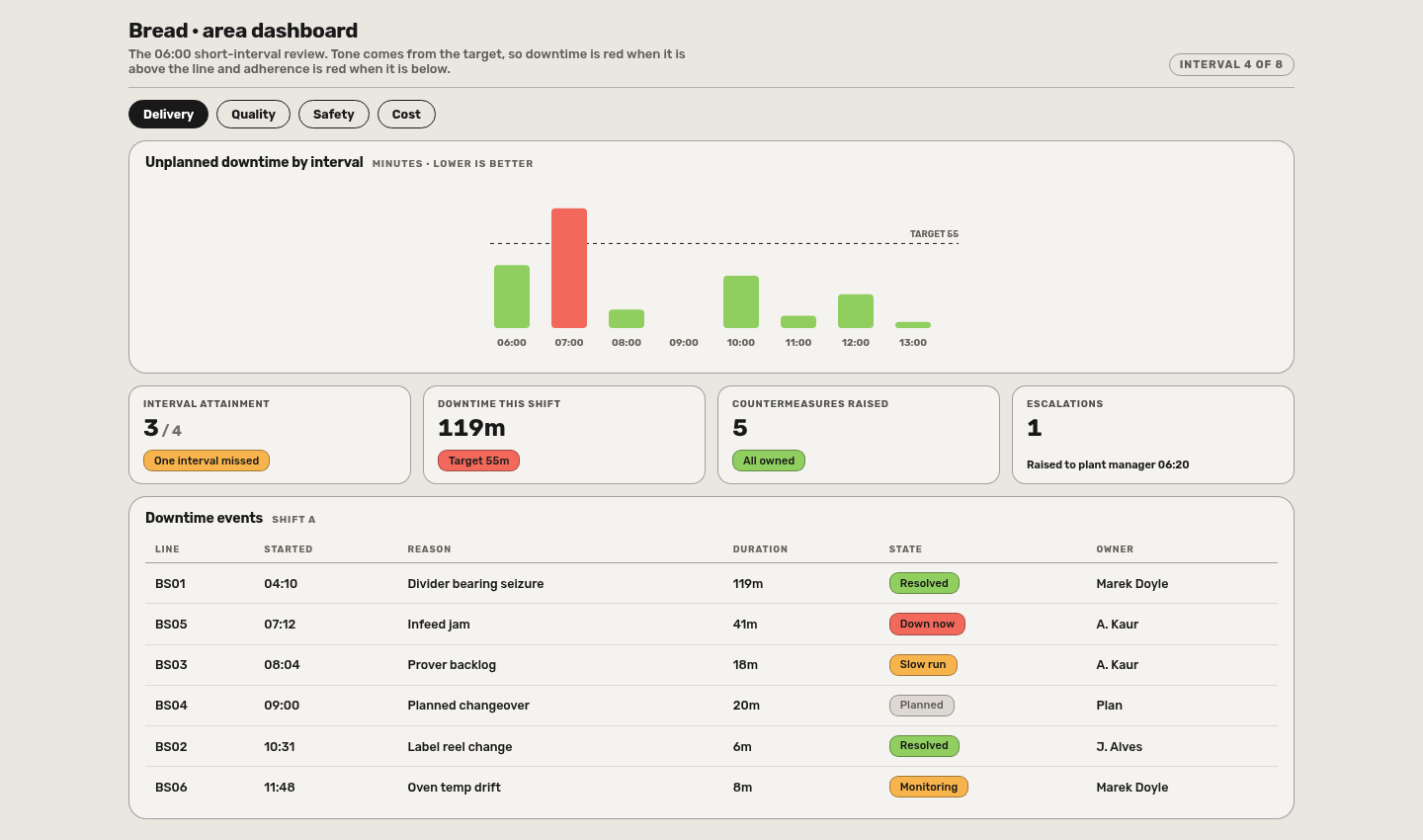
- Tier 2 (area, daily, ~20 min): yesterday's interval performance against target, open countermeasures and their owners, breakdowns needing an investigation, escalations from each line. Output: decisions, assigned actions, and what goes up.
- Tier 3 (site, daily or weekly): the trend — downtime by area, plan conformance, overdue actions, open investigations — plus only the exceptions that genuinely need site authority.
Why tier structures fall apart
Each tier builds its own pack. Tier 1 has a whiteboard, tier 2 a spreadsheet, tier 3 a slide deck — three versions of the truth, assembled by three people, that stop agreeing within a week. The meetings then spend their minutes reconciling numbers instead of making decisions.
Escalations lose their evidence. The problem that was concrete at the line ("BS01 divider bearing, third seizure this year, here's the timeline") arrives at tier 3 as "we've been having issues with line 1". Site leadership makes a judgement call on an anecdote.
Actions vanish between tiers. Tier 3 agrees something; nobody at tier 1 ever hears it. Or tier 1 raises something daily for a month and it never lands on anyone's list. The structure exists; the plumbing doesn't.
Every tier on the same board
In Lumen, the tiers are the same live picture at three zoom levels — not three documents. The briefing, the area review and the site weekly all read from the one board: the number the line saw at 10am is the number the site sees on Friday. An escalation carries its downtime events, its timeline and its asset history with it, because they're links, not attachments. And every action agreed at any tier lands on the same work board, visible to the tier below with an owner and a due date.
What are tier 1, tier 2 and tier 3 meetings?
How long should each tier meeting be?
What KPIs belong at each tier?
Do tiered meetings need software?
See it on a running site.
Let us show you what Lumen would look like in your facility.